
Upload a Picture
About this Site | Links | Random Pic | Advanced Search
Home | Latest Additions | Contributors
| Visitors
Fire Engine Photos
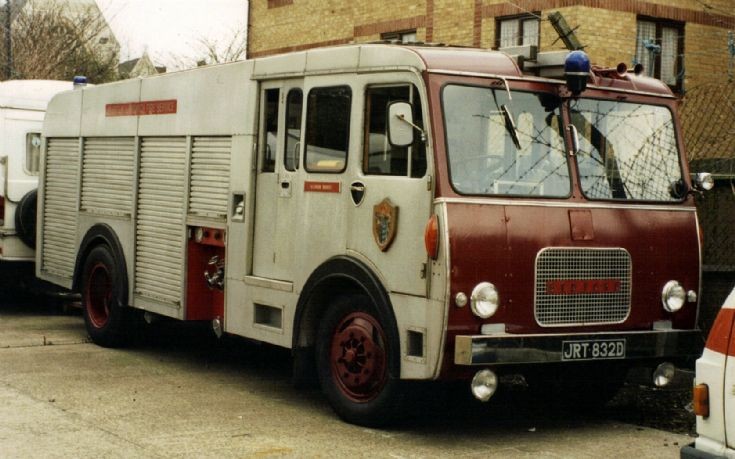
It seems a longer wheelbase, 4 lockers per side also the standard body is modified to reduce the overall height, so from a station with low ceilings and/or doors.
Added by Neal Glover on 17 July 2013.
Added by Neal Glover on 17 July 2013.
Needham Market. They have a low bridge in the town, meaning they have to have a specially built appliance
Added by Adey Allison on 17 July 2013.
Added by Adey Allison on 17 July 2013.
I might be wrong, but somehow doubt this may of carried an escape. Most model's designed for that purpose did not have rear lockers, as the rear was effectivly open, to make room for the escape wheels, to be partially accomodated within the appliance body. Also this particular machine, has be designed for reduced headroom.
Added by Michael G. on 18 July 2013.
Added by Michael G. on 18 July 2013.
Another photo of this appliance can be seen on this site picture 21658 with further details. As can be seen from this photo it would appear that the rear of the appliance is flush so this appliance was not designed to carry a wheeled escape.
Added by Paul Hassan on 18 July 2013.
Added by Paul Hassan on 18 July 2013.
No it didn't ever carry a wheeled escape. It was stationed at Needham Market. They have a low bridge in the town, meaning they have to have a specially built low height appliance.
Added by Adey Allison on 18 July 2013.
Added by Adey Allison on 18 July 2013.
A small number of fire brigades bought pump water tenders with mid mounted pumps. I have heard two different explanations for choosing this rather unusual configuration, but there may be others.
One was to enable the pump operator to stand on the sidewalk, which was thought to be safer than standing behind the appliance with his back to the traffic. Bear in mind, this was at a time when fire appliances did not have rear-facing warning lights.
The other was the ability to carry a high capacity (AFS style) portable pump, which was installed laterally at the rear of the vehicle, in a location where it was lower-mounted and more easily accessible than in the midships position, as on the famous green goddesses. These pumps were too large and too heavy to be carried on the floor of the miships side locker, which is where most brigades carried their smaller 250 gpm portable pumps.
Perhaps one of our friends can come up with a third possible reason for this unique appliance's configuration?
Added by Rob Johnson on 18 July 2013.
see picture 8040 for full explanation and picture 21658 as to how it should look
Added by Adey Allison on 19 July 2013.
Added by Adey Allison on 19 July 2013.
Bedford


What was the reason for this and what was round the back?
Added by Paul Hassan on 17 July 2013.