
Upload a Picture
About this Site | Links | Random Pic | Advanced Search
Home | Latest Additions | Contributors
| Visitors
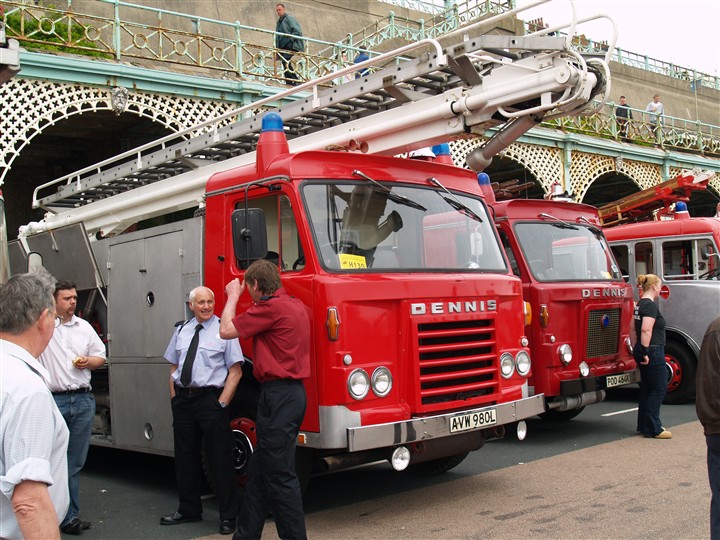
Fire Engine Photos
there is another one surviving! the ex flint simoniter still survives - not sure if its in working order though! its at the rear of crosby fire station in north liverpool
Added by Barry on 22 May 2008.
Added by Barry on 22 May 2008.
hi there!
we own the simonitor in the photo!if you would like more information please email me [email protected]
its so refreshing to see people still interested in them!
jenny
Added by Jenny Phipps on 27 May 2008.
we own the simonitor in the photo!if you would like more information please email me [email protected]
its so refreshing to see people still interested in them!
jenny
Added by Jenny Phipps on 27 May 2008.
Is the ex Flint Simonitor still at Crosby because it was donated to a museum in Liverpool when Clwyd decommissioned it.It was replaced by one of the first batch of Volvo FL6 14 WrL in the UK E999WHF, D999TFY at Deeside being the first.
Added by Gary Simpson on 07 December 2008.
Added by Gary Simpson on 07 December 2008.
see#8307 for a view of the roof so beloved of scratch model builders. I have plans to build the ex Manchester ERF Simonitor one day. Base model from Dinky is ready and waiting, already cut in half! Booms to be in square section Slaters Plastikard.
Added by Petros on 07 December 2008.
Added by Petros on 07 December 2008.
I understood the Durham one (RUP533M) was still around as well?
Added by Chris Hall Teesside. UK. on 01 November 2009.
Added by Chris Hall Teesside. UK. on 01 November 2009.
Clarence, I don't think 'Quint' would be an accurate name for this appliance. 'Quint' comes from the Latin 'quintus/quinque' meaning five, and refers to the five specific roles of the Jack-of-all-trades appliances commonly found in America.
Along with an extensive list of smaller items of equipment, the FIVE main roles (governed by the National Fire Protection Association) are:
1) PUMP: with a minimum capacity of 1000 gpm.
2) WATER TANK: a minimum capacity of 300 gallons.
3) HOSE: 30 cubic feet storage compartment for 2-and-a-half inch hose. And two further storage compartments, each with a minimum of three-and-a-half cubic feet for one-and-a half inch pre-connected hoseline.
4) AERIAL: with a permanently installed waterway.
5) LADDERS: a minimum of 85 feet of ground ladders.
In the guidelines set-out by the NFPA of the USA, I reckon the above appliance only meets a couple of their specific criteria to be called a Quint. A Bi, perhaps? A Duo? Or even a two-ey?
Added by YelpBullhorn on 03 November 2009.
Along with an extensive list of smaller items of equipment, the FIVE main roles (governed by the National Fire Protection Association) are:
1) PUMP: with a minimum capacity of 1000 gpm.
2) WATER TANK: a minimum capacity of 300 gallons.
3) HOSE: 30 cubic feet storage compartment for 2-and-a-half inch hose. And two further storage compartments, each with a minimum of three-and-a-half cubic feet for one-and-a half inch pre-connected hoseline.
4) AERIAL: with a permanently installed waterway.
5) LADDERS: a minimum of 85 feet of ground ladders.
In the guidelines set-out by the NFPA of the USA, I reckon the above appliance only meets a couple of their specific criteria to be called a Quint. A Bi, perhaps? A Duo? Or even a two-ey?
Added by YelpBullhorn on 03 November 2009.
YelpB; thanks for explaining the Quint so succintly; aka ARP/CARP.
The functions can be seen from the horse-drawn (and man-drawn) days of the 1800's; when each vehicle was limited to one role only... and no Tankers; water supply was hydrant, water-body, or bucket-brigade.
When the Internal Combustion engine and power drive was developed sufficently; then, it was possible to have combinations of these roles on one vehicle.
Triple Combination was the basic Pumper - pump, water tank and hose...usually with a ladder or 2, and some other gear.
The Quad had a full complement of ground-ladders; in addition to the pumper's load above. (Something, like a "Water Ladder", or the "Pump Escape", maybe ?)
The Aerial(TTL), Water Tower, Snorkel,etc seemed to remain mostly single-role/ double-role ("Duo"?)until recent years - usually the Aerial combining with a full complement of Ground Ladders, or, maybe, a Pump.
Today, with the extra specialist functions of Rescue, HazMat, Command Unit, Rapid Intervention, Heavy Rescue, Water Transport, etc thrown in; seems only the term "Quint" gets used much these days.
Must admit I got this from the literature; as my practical experience, I realize, has not gone any higher than the Triple Combinations in my rural area.
Regards, from Canada,
Pat_R-B
Added by Pat Rivers-Bowerman on 05 November 2009.
The functions can be seen from the horse-drawn (and man-drawn) days of the 1800's; when each vehicle was limited to one role only... and no Tankers; water supply was hydrant, water-body, or bucket-brigade.
When the Internal Combustion engine and power drive was developed sufficently; then, it was possible to have combinations of these roles on one vehicle.
Triple Combination was the basic Pumper - pump, water tank and hose...usually with a ladder or 2, and some other gear.
The Quad had a full complement of ground-ladders; in addition to the pumper's load above. (Something, like a "Water Ladder", or the "Pump Escape", maybe ?)
The Aerial(TTL), Water Tower, Snorkel,etc seemed to remain mostly single-role/ double-role ("Duo"?)until recent years - usually the Aerial combining with a full complement of Ground Ladders, or, maybe, a Pump.
Today, with the extra specialist functions of Rescue, HazMat, Command Unit, Rapid Intervention, Heavy Rescue, Water Transport, etc thrown in; seems only the term "Quint" gets used much these days.
Must admit I got this from the literature; as my practical experience, I realize, has not gone any higher than the Triple Combinations in my rural area.
Regards, from Canada,
Pat_R-B
Added by Pat Rivers-Bowerman on 05 November 2009.
Dennis


I have a special interest in Simonitors and I am amazed one has survived into preservation. I would be interested to know the story if anyone has it. Are the booms still operational? I have been fascinated by them ever since as a teenager I saw the Liverpool prototype on the BBC's Tommorrow's World programme. The Essex ones were unusual in that they were foam tenders. By the way, the Liverpool one was based at the three appliance Canning Place fire station in central Liverpool and at one time (about 1971-2) the other bays were occupied by the 65 foot Snorkel and a Pump Hydraulic Platform (PHP)surely making it the only all hydraulic line up in fire history - I am sure I have not made this up, but I have no photo to prove it sadly. Has anybody else?
Added by Peter Williams on 09 May 2008.