For decades the standard German pump water tender had a 2400 liter tank. The thinking behind this was that a branch using a 38 or 52 mm diameter C attack hose was rated at 400 LPM, while the fatter ( and heavier) 75mm B hose had an 800 LPM branch. Depending on the situation, the water tender - which was always the first due - had three to six minutes of autonomy before it (or the follow up pump) had to start flowing a hydrant. They also had a first aid hose reel for minor incidents, with maximum flow of around 150 LPM. Unlike some other countries, this was never deemed adequate for interior structure fires and was usually deployed only on outdoor fires.
In rural areas, a heavier water tender with a 2400 LPM pump and 5000 liter tank was commonly deployed in addition, to compensate for the extra time needed to find a water source. These were typically on a 15 ton chassis and had a two person crew.

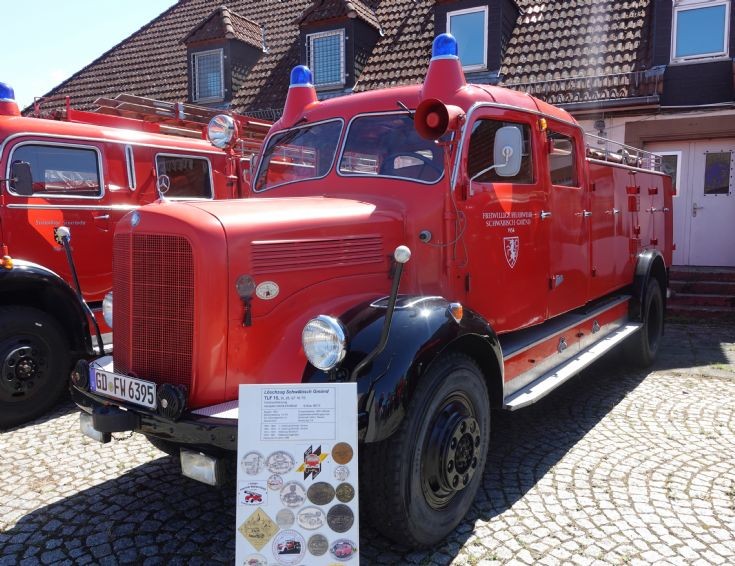


In rural areas, a heavier water tender with a 2400 LPM pump and 5000 liter tank was commonly deployed in addition, to compensate for the extra time needed to find a water source. These were typically on a 15 ton chassis and had a two person crew.
Added by Rob Johnson on 02 November 2026.