
Upload a Picture
About this Site | Links | Random Pic | Advanced Search
Home | Latest Additions | Contributors
| Visitors
Fire Engine Photos
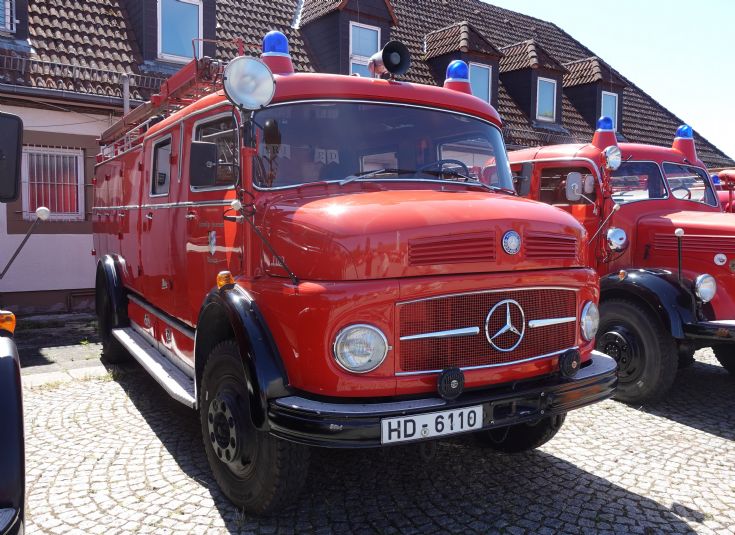
The LF 16 normative standard was introduced in 1950 and was amended to LF 20 in 2004. This is still operational, although of course it is a minimum standard. Higher capacity pumps are often installed - while the unit is still designated as a LF 20. The newer standard also calls for a 1200 litre water tank instead of 800 litres - and in this case as well there is nothing to stop individual brigades specifying higher capacities if they want to.
Added by Rob Johnson on 22 September 2026.
Added by Rob Johnson on 22 September 2026.
Mercedes-Benz


Mercedes or Magirus, but MAN, Henschel and even Krupp also turned up in smaller numbers. These had an 800 litre water tank, but no first aid hose reel system. The tank was meant to allow autonomy for C hose 52mm attack line to operate for two minutes, hopefully enough time for hydrant hookup. In towns with extensive rural fire cover responsibilities a version was preferred which had a rear mounted PP and no tank. This LF16TS was distinctive looking, as the main pump was front mounted to make space for the PP.
The standard first turnout for a structure fire comprised a water tender (1600 LPM pump, 2400 liter tank, six crew), the LF16, a 30 meter TTL and a command van. Total riders 6+9+2+2=19.
For a vegetation fire, the TTL crew switched to a 5000 liter 4X5 water tender with a 2400 LPM pump, while in the event of a call to a RTA or rescue they rode a GW (or heavy rescue) tender.
Added by Rob Johnson on 21 September 2026.