For more than a hundred years French fire services have operated both compact first aid light pumpers ( “premier secours” ) like this example as well as full size units, usually from the same stations. With a four to six man crew, the PS is first to turn out and has enough equipment, personnel, water and pump capacity to initiate operations - and can often single handily deal with a lot of minor incidents. The follow up pumper has a more powerful pump, a bigger water tank, more comprehensive equipment including longer ladders and a larger crew. As many as fourteen in the twenties (!) but normally either six or eight these days.
The other advantage of the small PS pumpers is that they can get into and use some streets which are a problem for bigger vehicles. This is especially an issue in the central districts of many older communities with very narrow streets and ancient buildings.
In Paris the famously very unusual PS units are combined with basic life support ambulances, with a unique and very clever body style, amply illustrated in many photos on this site. Outside of the city however other fire services keep PS designs which are exclusively designed for firefighting and related tasks.

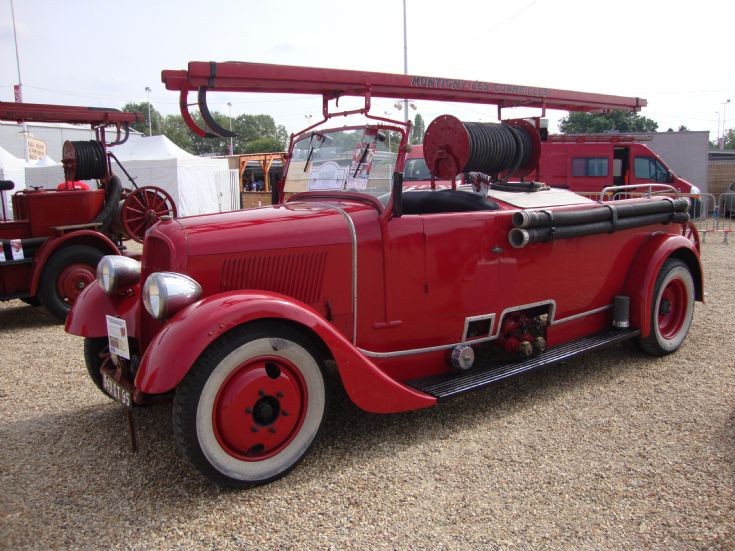


The other advantage of the small PS pumpers is that they can get into and use some streets which are a problem for bigger vehicles. This is especially an issue in the central districts of many older communities with very narrow streets and ancient buildings.
In Paris the famously very unusual PS units are combined with basic life support ambulances, with a unique and very clever body style, amply illustrated in many photos on this site. Outside of the city however other fire services keep PS designs which are exclusively designed for firefighting and related tasks.
Added by Rob Johnson on 24 April 2026.