
Upload a Picture
About this Site | Links | Random Pic | Advanced Search
Home | Latest Additions | Contributors
| Visitors
Fire Engine Photos
These volunteers have responded to between 40 and 50 incidents each month this year. A likely full year of runs will end up around 550. The volunteers operate out of five stations, insuring a rapid turnout as well as a short drive for the first due units.
Added by Rob Johnson on 03 November 2025.
Added by Rob Johnson on 03 November 2025.
This fleet was actually very similar to Manhasset-Lakeville FD on Long Island, where I lived for many years. MLFD has an almost identical population of 43,000 and also operated an all volunteer organization out of five fire stations. Their fleet included eleven pumpers, two ladder towers, two rescues and one quint along with five chiefs’ cars and one utility truck. Their call load was quite a bit higher at around 100 a month but did include a lot of AFAs.
Added by Rob Johnson on 03 November 2025.
Added by Rob Johnson on 03 November 2025.
In most of the thirteen states in Federal Germany it is rare for towns with less than 80,000 to 100,000 population to have a full time fire service, although some have a small staff on duty 24/7 to turn out the first due pumper, a minor alarm van and/ or a turntable ladder or rescue rig. Every larger town or city with full time firefighters also has a volunteer organization, and these are typically quite extensive. The largest city, Berlin, has 35 fire stations staffed by full time paid crews and another 39 volunteer stations, 22 of which are combined with full time locations while the rest are stand alone. These are mainly in outer suburban areas, to insure a timely first response, while the combined station volunteers more often fill a standby or specialist role.
Added by Rob Johnson on 06 November 2025.
Added by Rob Johnson on 06 November 2025.
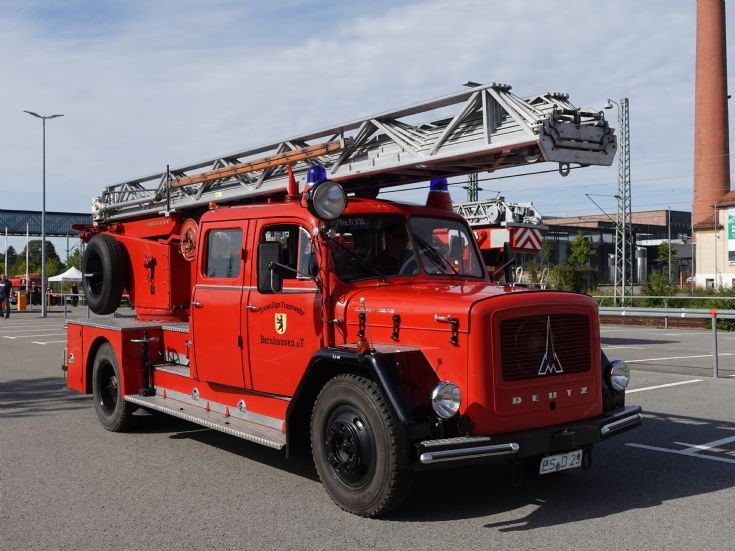
Magirus Deutz


Added by Rob Johnson on 02 November 2025.