
Upload a Picture
About this Site | Links | Random Pic | Advanced Search
Home | Latest Additions | Contributors
| Visitors
Fire Engine Photos
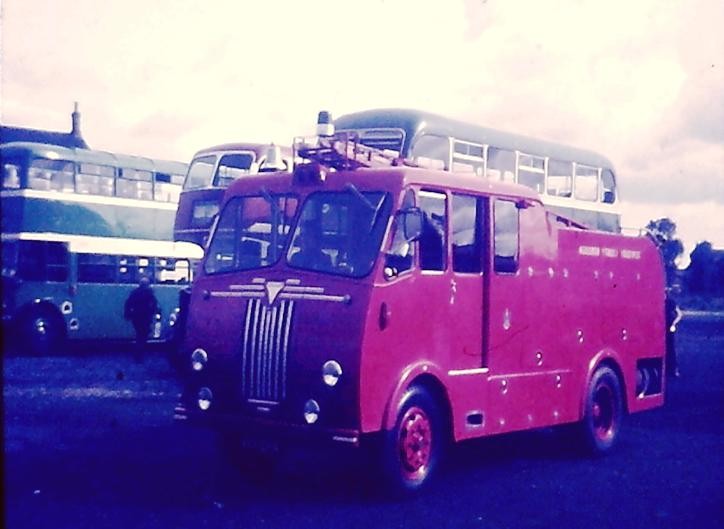
This appliance was an exhibit at The Yorkshire Fire Museum and the following information comes from their souvenir guide of Summer 1977.
This 1955 Maudsley/Merryweather Marquis served with Dewsbury Fire Brigade until 1972. It was the first of six prototypes and Britain's first high-speed diesel fire engine. The 7.7 litre AEC engine gave it a top speed of around 60mph with fuel consumption between 15 and 18mpg.
The Merryweather pump could move 850 gallons a minute.
Added by Chris Wood on 09 August 2019.
This 1955 Maudsley/Merryweather Marquis served with Dewsbury Fire Brigade until 1972. It was the first of six prototypes and Britain's first high-speed diesel fire engine. The 7.7 litre AEC engine gave it a top speed of around 60mph with fuel consumption between 15 and 18mpg.
The Merryweather pump could move 850 gallons a minute.
Added by Chris Wood on 09 August 2019.
Maudslay


I believe their prototype was a four door, like earlier Merryweather designs, but - for some reason - British fire brigades in the 1950s and 1960s simply loved these two door designs.
Not only Merryweather, but Alfred Miles, HCB-Angus and countless smaller fire engine builders built two door cabs with either sliding or bi-fold doors.
This idea of building fire engines with two door crew cabs was not limited to Britain. It was also prevalent in Finland, for whatever reason.
I never understood why they were so popular; it obviously took longer for the crew to get inside, and longer to exit, and there could be no bulkhead storage, because the DOP and OIC had to be able to get in and out of the front seats from the rear. In addition, some of the doors were very narrow and not easy to negotiate for larger crew members wearing BA sets.
Added by Rob Johnson on 31 July 2019.