
Upload a Picture
About this Site | Links | Random Pic | Advanced Search
Home | Latest Additions | Contributors
| Visitors
Fire Engine Photos
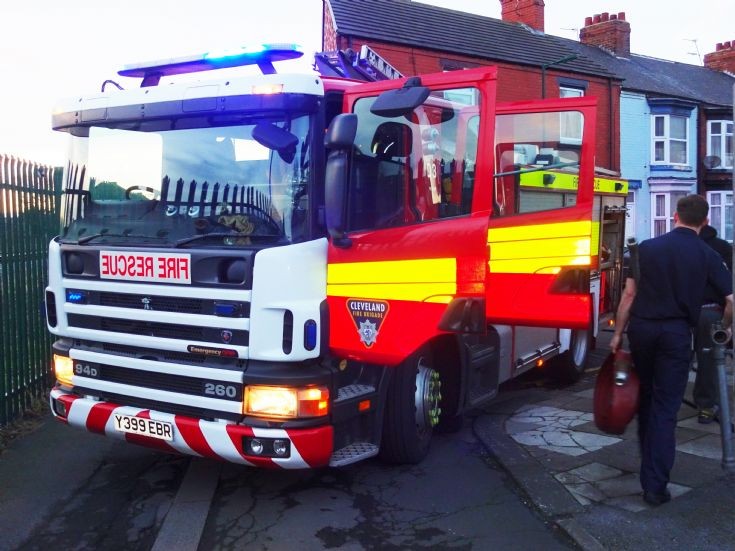
That is old esp to be on the run unless she is a spare.... looks tidy enough like.
Added by John Johnstone on 06 February 2016.
Added by John Johnstone on 06 February 2016.
Still very much on the run, seems to attend all the Redcar fires. Redcar also having a new Scania Rescue Pump. Seen here in same street coincidentaly //www.fire-engine-photos.com/picture/number38443
Added by Craigw on 25 February 2016.
Added by Craigw on 25 February 2016.
JUST WONDERING IF ANY ONE KNEW BACK IN 2001 AMERICAN FIRE TRUCK WHAT WAS THE WATER PRESSURE PUMPED OUT THEN, , , , , COMPARED TO 2016 NOW PLEASE... THXS HEAPS FOR ANY IMFO.
Added by DINO MARTINELLI on 25 April 2016.
Added by DINO MARTINELLI on 25 April 2016.
US fire pumpers were rated at 150 PSI (10 AT) in 2001 and still are. The vast majority of full size pumpers are still rated at either 1250 or 1500 US gallons at this pressure, corresponding to either 4550 or 5460 liters per minute respectively. Some pumpers and aerial ladder tower combinations are rated at 2000 USGPM, but higher pump capacities are rare, except on airfield crash trucks.
There are also numerous light pumpers, brush trucks and tankers with lower capacity pumps - ranging from 250 to 1000 USGPM.
Very few US pumpers have high pressure pumps, which are of course very popular in Europe for hose reel applications at up to 40 AT. Instead, the preference is for preconnected 45 MM flat hoses, supplied by the 10AT pump. Variations also include 25 MM "trash lines" for minor outdoor fires, and each fire department decides what types of hoses to use, so there are innumerable different configurations.
Added by Rob Johnson on 26 April 2016.
Just to add that a few cities, including New York, have "high pressure" pumpers to address the need to supply water to upper floor distribution systems in skyscrapers.
The newer ones delivered to FDNY can deliver 2000 USGPM at 150 PSI, of which approximately 500-600 USGPM can be supplied at over 600 PSI (40 AT), depending on hydrant input pressure. These units have a three-stage pump, while standard FDNY pumpers incorporate a two-stage 1000 or 2000 USGPM pump. The third stage is engaged only when the pump is already operating in the two-stage "high pressure" setting, which is in practice only rarely used in normal firefighting situations.
San Francisco and most other cities with skyscapers pump from one engine to another if needed, before connecting to the building riser system. This practice yields around 700 USGPM at up to 500 PSI, plus the effect of hydrant supply pressure. San Francisco, of course, also has a dedicated firefighting high pressure hydrant system, in addition to hydrants on the regular municipal water main, and this is a useful augmentation when it comes to skyscraper fires.
Special hoses are needed for these extreme pressures, as the US test for bursting pressure for regular fire hose is 250 PSI (17 AT). FDNY uses 3 inch (75 mm) hoses which have a bursting pressure tested to 2000 PSI (136 AT!), colored red with special alloy white painted couplings. The dangers of severe injuries if one of these bursts is so high that the SOP is to secure these hoses with ropes before charging them. The FDNY fleet of over 200 engines, however, includes only eight high pressure pumpers, so these are pretty rare. All are understandably quartered in Manhattan.
Added by Rob Johnson on 27 April 2016.
Scania


Added by Dave Todd on 05 February 2016.