
Upload a Picture
About this Site | Links | Random Pic | Advanced Search
Home | Latest Additions | Contributors
| Visitors
Fire Engine Photos
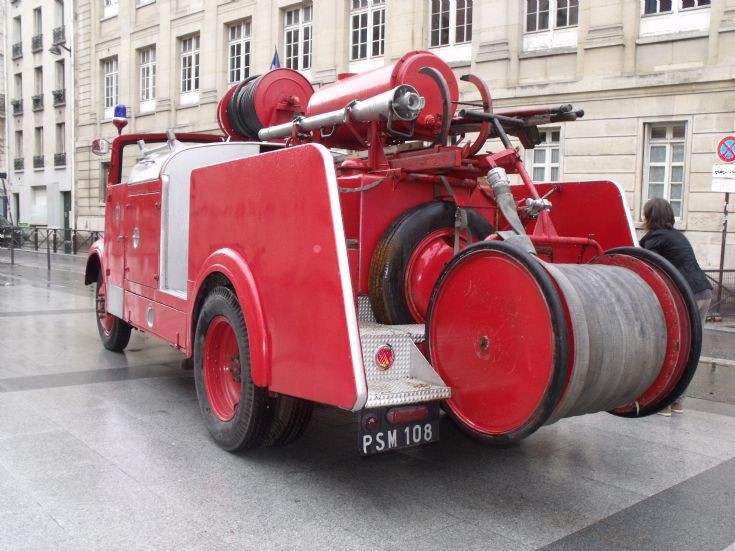
I believe this generation of PS had a pump of about 800 to 1000 LPM at 10 AT. The PSM, like this one, included a class B foam capability.
Added by Rob Johnson on 17 November 2013.
Added by Rob Johnson on 17 November 2013.
Les - an update, following a bit of additional research. These PS had a pump rated at 1, 000 LPM at 15 AT (275 USG @ 220 PSI) and a 600 liter water tank = 165 USG. The PSM, like this example, also had an additional small class B foam compound tank and carried a foam branch.
The current generation of PS pumper-ambulance combinations have essentially the same firefighting capabilities, but now incorporate a CAFS system which can be deployed on both class A and class B fires, depending on the proportioning.
They now have a five member crew, and of course spend about 75% of their time on EMS response rather than fires or other types of service call.
Added by Rob Johnson on 09 June 2017.
The current generation of PS pumper-ambulance combinations have essentially the same firefighting capabilities, but now incorporate a CAFS system which can be deployed on both class A and class B fires, depending on the proportioning.
They now have a five member crew, and of course spend about 75% of their time on EMS response rather than fires or other types of service call.
Added by Rob Johnson on 09 June 2017.
Hotchkiss


These had a six man crew, a light pump, water tank with hosereel, a single one man hose cart with 70 mm hose, a foam branch, a hook ladder and not much additional equipment - but they were at every fire station, and could squeeze into some very narrow streets - so they usually responded quite quickly.
The four crew members who accompanied the OIC and driver sat out in the open on seats incorporated over the rear wheel arches, two facing forward and the other two facing backwards. The decidedly uncomfortable wooden slatted seat can be seen just next to the spare wheel - just as well most runs were very short!
This generation of PS was backed up at structure fire calls by a major pump or pump-tanker (FP or FPT) with an eleven man crew and either a 30 meter aerial ladder or an 18 meter wheeled ladder carried on a separate truck. These ladders had two to five crew, depending on the station where they were based.
So if you called the BSPP to a building fire in those days, you could expect to see around twenty very youthful, fit and eager soldier-firefighters turn up at your house.
There was a rumour at the time that most false alarm calls came from young(ish) women, but I never saw any statistics!
Added by Rob Johnson on 14 November 2013.