Based on nationwide specifications for CCFF, these 4X4 wildland fire pumpers have a 2000 liter tank, a 1000 LPM pump and accommodate a crew of four. They carry both a 23mm hose reel and a reel with 32mm unlined flat hose. This can be safely dragged over burnt materials, as it is intended to continuously leak small amounts of water to protect it from being burned. The most commonly used variable flow nozzle's output is 50 to 150 LPM.
In addition to Renault, both MAN and Mercedes Unimog are popular CCFF chassis in France. There are a few older IVECO units still in service, although by now they are probably all reserves.
The SOP is for these to get as near to the fire as possible, then cycle back to a tanker to refill. The tankers are two, three and now increasingly four-axle units with capacities between 6000 and 14000 liters, including many 4X4 and 6X6 units.
The old forest fire fighting solution was to use a wide variety of ex-US army GMC and other 6X6 trucks left over after WWII. These were fitted with a crew cab, pump and tank and repainted red.
Many of them put in decades of service. In 1970 I witnessed dozens of them attending a major fire in the famous Fontainebleau forest, and they must have been at least 25 years old then!
Now, the newer CCFF have GPS so they cannot get lost in heavy smoke conditions and CAFS to make the most of limited water supplies. Progress!

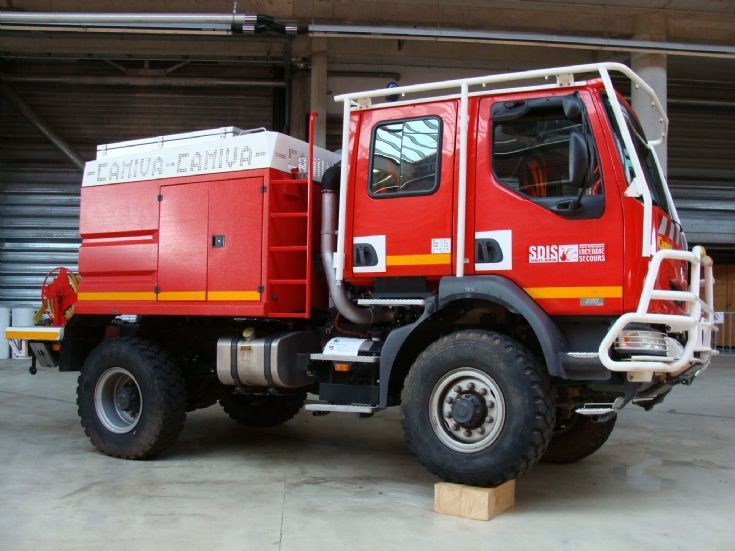


In addition to Renault, both MAN and Mercedes Unimog are popular CCFF chassis in France. There are a few older IVECO units still in service, although by now they are probably all reserves.
The SOP is for these to get as near to the fire as possible, then cycle back to a tanker to refill. The tankers are two, three and now increasingly four-axle units with capacities between 6000 and 14000 liters, including many 4X4 and 6X6 units.
The old forest fire fighting solution was to use a wide variety of ex-US army GMC and other 6X6 trucks left over after WWII. These were fitted with a crew cab, pump and tank and repainted red.
Many of them put in decades of service. In 1970 I witnessed dozens of them attending a major fire in the famous Fontainebleau forest, and they must have been at least 25 years old then!
Now, the newer CCFF have GPS so they cannot get lost in heavy smoke conditions and CAFS to make the most of limited water supplies. Progress!
Added by Rob Johnson on 20 September 2013.